Taylor's WWI Worksheet - Life in the Trenches
1. What were the trenches and why were they used in WWI?
Long, narrow ditches dug into the ground for soldiers to live and fight in, providing crucial cover from machine guns and artillery, which became necessary due to new, lethal weaponry that made open assaults suicidal, leading to a stalemate on the western front where armies dug elaborate, interconnected systems to defend territory and protect troops from consistent bombardment.
2. What was the structure of a trench system?
A trench system was a complex network of parallel trenches (front-line, support, reserve) connected by communication trenches zigzagging for defence, featuring sandbags, duckboards, dugouts, barbed wire, and defensive traverses to protect soldiers from artillery and provide cover for movement.
3. What were the daily living conditions like for soldiers in the trenches?
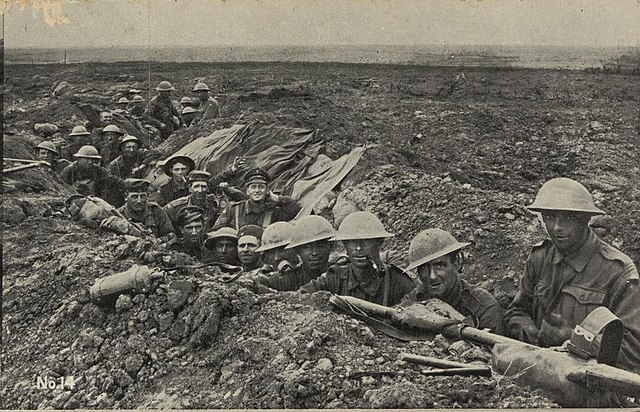
Daily life in the trenches was a brutal mix of boredom, terror, and filth, characterised by constant threats from artillery and snipers, overcrowded and muddy conditions, poor hygiene, and infestations of rats and lice, leading to diseases like trench foot and trench fever, though soldiers maintained routines like sentry duty, cleaning weapons, and writing letters amidst the squalor.
4. What dangers and health problems did soldiers face in the trenches?
Soldiers in the trenches faced immediate physical dangers from combat and chronic health problems caused by horrific, unsanitary living conditions.
- Weaponry - The primary danger came from enemy fire, particularly artillery bombardments and machine guns, which caused the majority of casualties.
- Poison gas - The use of chemical weapons like chlorine, phosgene, and mustard gas caused blindness, severe skin rashes (blistering), breathing difficulties, suffocation, and death.
5. What was a typical day like for a soldier in the trenches?
A monotonous cycle of tedium and terror, filled with chores like repairing trenches, cleaning weapons and standing guard at dawn/dusk, interspersed with periods of extreme danger from shelling, snipers, and patrols into no man's land, all while enduring mud, lice, rats, and the constant threat of diseases like trench foot.
6. What did soldiers do to cope with life in the trenches?
To cope with life, soldiers found relief in routine tasks, games (like cards), writing letters home, and finding moments for hygiene.
7. What weapons and warfare tactics were used in trench warfare?
Trench warfare in WWI involved defensive dominance via machine guns and artillery, forcing troops into trenches protected by barbed wire, with attackers using rifles, grenades, and improvised weapons.
Article Title:
The Christmas truce, women's female shock battalions in Russia, and animals (pigeons, dogs) saving lives, alongside massive industrial warfare where tanks were disguised as landships, giant mines were detonated under trenches (audible in London), and even the U.S. food names were changed to liberty versions to avoid German association.
WWI and Its Backstory
World War I did not erupt suddenly in 1914; it was the result of long tensions that had been developing across Europe for decades. By the early twentieth century, European nations were deeply interconnected through alliances, rivalries, and competition for power. Industrialization had transformed economies and militaries, making nations stronger but also more anxious about their security and influence.
One major cause of the war was militarism, the belief that a strong military was essential to national success. European powers invested heavily in armies and navies, creating an arms race that increased fear and suspicion among nations. Germany and Britain, in particular, competed to build the most powerful navy, while countries like France and Russia expanded their land forces. Military leaders gained significant influence over political decisions, making diplomatic solutions less likely during times of crisis.
Another key factor was the system of alliances that divided Europe into opposing camps. Germany, Austria-Hungary, and Italy formed the Triple Alliance, while France, Russia, and Britain later became known as the Triple Entente. These agreements were intended to provide security.
Nationalism also played a powerful role in destabilizing Europe. Many people strongly identified with their nation and believed it was superior to others. In multi-ethnic empires such as Austria-Hungary and the Ottoman Empire, nationalist movements pushed for independence, especially in the Balkans.
Imperial competition further intensified rivalries among the great powers. European nations competed for colonies in Africa and Asia, seeking raw materials, new markets, and global prestige. These imperial ambitions often led to diplomatic crises and resentment.
The immediate trigger for World War I occurred on June 28th, 1914, when Archduke Franz Ferdinand was assassinated in Sarajevo by a Serbian nationalist. Austria-Hungary blamed Serbia and, with Germany's support, issued an ultimatum that Serbia could not fully accept. When Austria-Hungary declared war, the alliance system set off a chain reaction, drawing Russia, Germany, France, and eventually Britain into the conflict within weeks.
By the summer of 1914, decades of militarism, alliances, nationalism, and imperial rivalry had pushed Europe to the brink. The assassination of the archduke was only the spark that ignited a much larger fire. World War I emerged from a complex web of causes, showing how interconnected political tensions can escalate into a global catastrophe when diplomacy fails.
In conclusion, World War I ended with immense loss and lasting consequences for the world. Millions of soldiers and civilians died, and much of Europe was left physically and economically devastated. The war reshaped national borders, led to the collapse of empires, and harsh conditions were imposed on defeated nations through treaties like the Treaty of Versailles. Although the fighting ended in 1918, the unresolved tensions and instability left behind helped set the stage for future conflicts, including World War II.
_15.jpg)